
If LIBRA and MELANIA hadn't emerged, would the crypto world really be better off?

Original Title: What if $MELANIA was never launched?
Original Author: 0xFinish, 0xTrack Member
Original Translation: ChatGPT
Editor's Note: The author reflects on the birth of PumpFun, the Bitcoin halving, the differences between 2021 and current scams, and how to adapt to a new market cycle. The author reminds investors in the current market environment to be mindful of limited liquidity, have a clear exit strategy, stay on top of market narratives during rotations, avoid excessive FOMO, always keep some profits in stablecoins, and continue to accumulate long-term quality assets like BTC.
Below is the original content (slightly rearranged for readability and comprehension):
This cycle has been very challenging, worse than any cycle before. Many even refer to it as the "scam cycle" due to the increasing number of "rug pulls" and rug projects causing concern.
The purpose of this article is to look back and try to predict what lies ahead for those of us who only want to succeed.
The Birth of PumpFun
On January 19, 2024, PumpFun was born, forever changing the face of meme coins. Everyone had the opportunity to launch a token, regardless of their age, profession, or nationality.
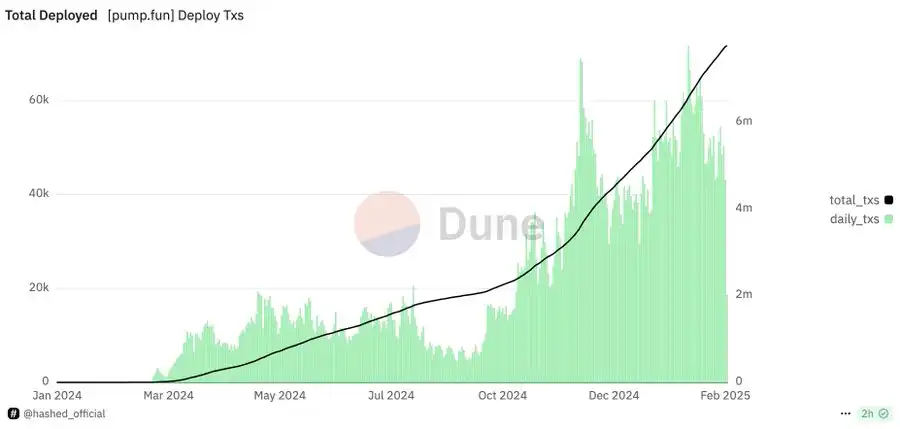
At the time, the hype was not significant, but PumpFun started to gain momentum in March 2024, with early projects like $MICHI and $FWOG. Anyone could launch a meme coin in seconds, transforming the entire market.
As more tokens emerged, PumpFun became a platform for fair distribution, free from insider rug pulls. While it seemed attractive, the extraction fees were substantial.
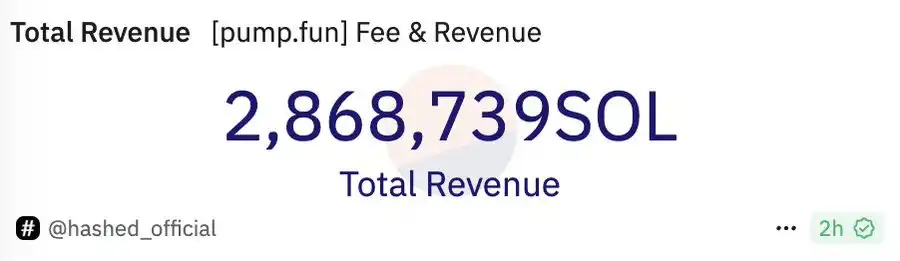
Since its launch, PumpFun has earned over 2.86 million $SOL, equivalent to around $5.77 billion. It may be one of the most successful startup projects ever.
This liquidity has been permanently withdrawn and pocketed by PumpFun's developers. However, I believe this is a key reason that sets this cycle apart. We will delve further into this shortly.
Bitcoin Halving
Next is a key moment in the current cycle. On April 20, 2024, the Bitcoin mining reward will decrease from 6.25 BTC to 3.125 BTC. When the first ETF was approved on January 10, 2024, many thought it might be a "sell the news" event, but we actually witnessed a new ATH.
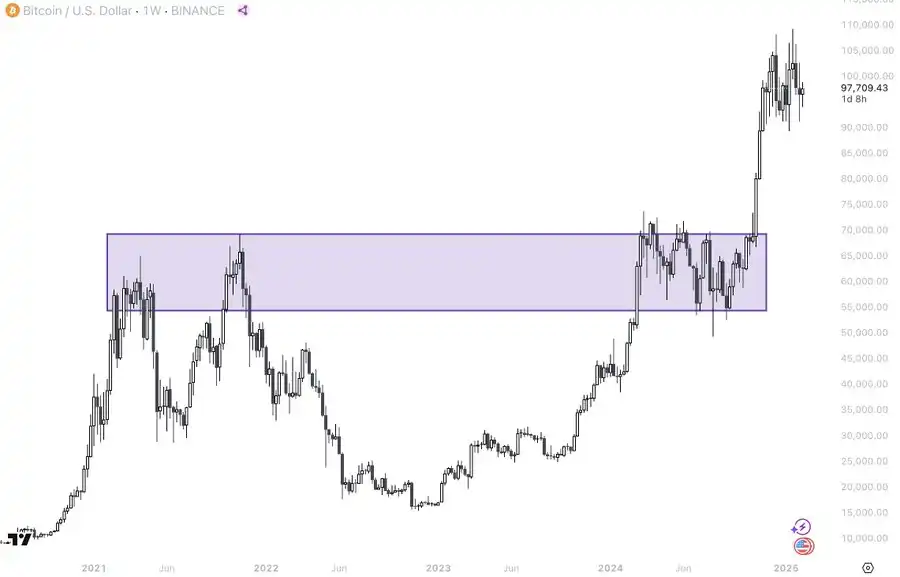
ETF + Halving is the strongest bullish combination for BTC, as many have been waiting for institutional liquidity to start entering the market. And that's exactly what happened. Fidelity, BlackRock, and MicroStrategy are buying in every day, continuously injecting liquidity into the market.
This gave people hope. They thought this bull run would be similar to the previous ones, but this time, everything was different.
The market is always against the masses, meaning if retail is bullish, the market is likely to fall, and vice versa. Perhaps this is what's happening here, and we are about to reveal this.
Your Expectation Is the Issue
Looking back at the 2017 and 2021 cycles, the situations were very similar. Making money wasn't hard, and it didn't require any special knowledge. There were 10-20 mainstream coins that everyone knew, and everyone was accumulating.
First, BTC rose, then ETH followed, acting as the beta asset of the cycle, usually yielding higher returns. After that, we moved from ETH to other mainstream coins, then to some small-cap coins.

That's why many people in 2024 decided to skip the BTC phase and directly invest in ETH or other altcoins. The logic is simple. If ETH can rise 5x, and larger altcoins can rise 10x, why wait for a 2-3x return on BTC?
This logic is very straightforward; however, the "public" did not consider that this cycle might be different. The number of projects, tokens, and meme coins is 100 times more than before, and everyone rushed to buy familiar tokens like $DOT, $ATOM, $ADA, expecting the promised 10x returns.
As a result, when liquidity started flowing into shitcoins, the number of new projects was too high, leaving old projects behind instead.
Scams in 2021 vs Now
Just saw @Overdose_AI make a valid point and decided to chime in here. Going back to 2021, the scammers of the "Rug Pull" were quite creative, as long as they weren't too greedy, they almost let everyone jump ship.
· Terra $LUNA controlled by Do Kwon
· FTX controlled by Sam Fried
· 3AC invested a long time before the crash
· Alameda drove different narratives and manipulated the market
Scams back then were relatively challenging and required a certain level of intelligence. Whereas now, people simply leverage big brands, celebrities, and even rulers of nations to promote their garbage projects.
People have become accustomed to gambling, FOMOing into $TRUMP and $MELANIA, deciding to make up for losses through $CAR or $LIBRA, only to end up losing all their money.
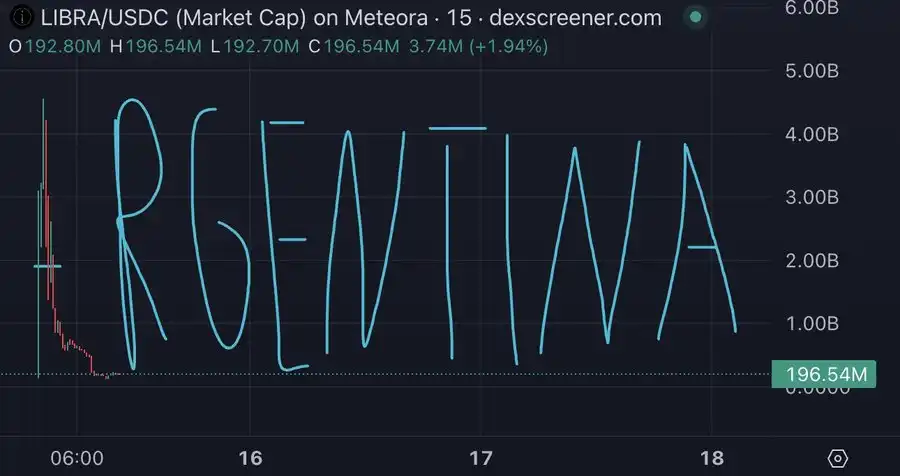
I know 10 to 15 exceptional traders who once invested in $LIBRA through DCA, seized the opportunity, waited for a pullback, while insiders made over $1 billion of pure profit off of them.
Time to Adapt
It's time to understand that the cycle will never be exactly the same; shitcoins are not just Beta versions of BTC or ETH; they are an entirely different niche market that brings more risk and more opportunity.
You can't just go long on $DOT or $ATOM because BTC hit a new high, as that was effective in 2021.
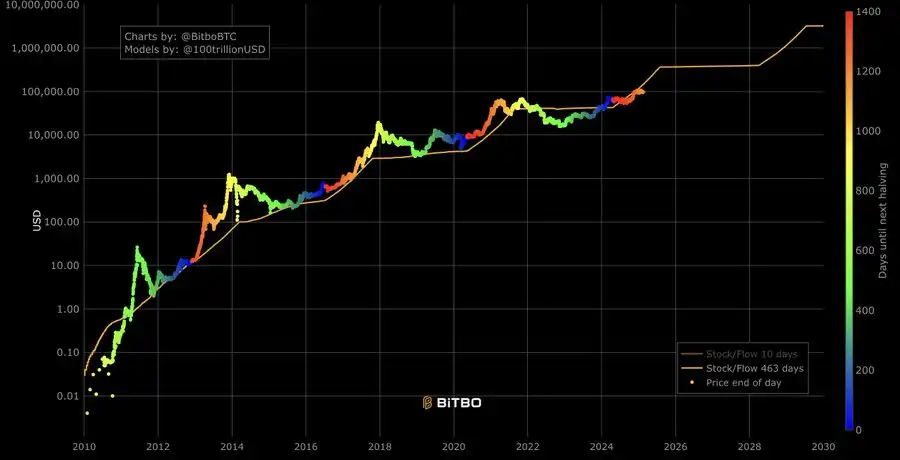
Make no mistake, I still believe in BTC and think it will remain one of the best compounding assets for the next 10 to 20 years, but the returns will be akin to stocks, no longer the easy 200% annual growth.
Conclusions to Remember in This Cycle
1. HODLing is what fools do; if you didn't sell at the right time, you're screwed. @MustStopMurad has been telling you to HODL, and almost all of his meme coins have plummeted 80%-90% since ATH.
2. You need to have a clear sell strategy. I know this may sound harsh, but that's how the market is; you must determine your exit before making a trade.
3. Narrative Rotation, recently, we have experienced crazy market rotations from meme coins to AI Agents, and then to $TRUMP. If at any point you didn't keep up, you can almost guarantee that most of your gains will be wiped out. Always follow the market narrative and remember that liquidity is limited.
4. "Timely" is always better than "Early." Don't overthink, find the right time to enter, but also don't be too anxious to wait.
5. Always convert a portion of your profits into a stablecoin. No matter how much you believe in a protocol, continue to accumulate BTC, which is still better than most stock or real estate opportunities.
To be honest, I don't know if we are going to see a decline or a rise next. Currently, I have positions on both sides. If the market declines, I will continue to buy more BTC and $ETH.
If the market rises, I have enough altcoins to avoid FOMO, and I know I can profit through trading and help my followers.
I hope this cycle is not over yet. Currently, BTC's consolidation will determine our trend for the next 2-3 months.
You may also like

Morning Report | OpenAI has submitted an S-1 registration statement draft to the U.S. SEC; Morpho completes $175 million financing

Galaxy Deep Research Report: How Hyperliquid's HIP-4 Upgrade Changes the Landscape of Prediction Markets?

Latest research from 13 top universities including Cornell University: The current state, challenges, and misconceptions of the fusion of Crypto and AI

Deconstructing Anthropic: The Best AI Company, Possibly Also a Type of Organizational Invention

Every exchange is a "Universal Exchange."

The counterattack of traditional finance: Alliance chains are quietly reviving
Pantera Capital Partner: How Tokenization is Restructuring the Private Equity and Early Investment Ecosystem?

Mastercard Launches Agent Pay for AI, Plans to Record AI Agent Payment Authorizations on Polygon
Mastercard launched Agent Pay for AI, a new payment protocol designed to help AI agents make small payments such as pay-per-use access to data and APIs. The system plans to record human-granted AI agent permissions on Polygon, focusing on verifiable authorization, identity, and payment controls.

Curve Deploys Llamalend v2 on Optimism With 250,000 OP Incentives
Curve launched Llamalend v2 on Optimism with 250,000 OP incentives from the Optimism Foundation. The upgrade expands Llamalend beyond its earlier crvUSD-focused model, adding broader collateral support, LlamaRisk market reviews, and the ability to use Curve LP tokens as collateral.

Raydium Old Liquidity Pool Reportedly Exploited, With $1.34 Million Moved to Ethereum and Tornado Cash
An old Raydium liquidity pool was reportedly exploited for around $1.34 million in USDC, RAY, and wSOL, with the stolen funds bridged to Ethereum and deposited into Tornado Cash. The incident highlights the tail risks of legacy DeFi pools, old contracts, and cross-chain fund laundering paths.
Kalshi Executive Challenges “SBF Backed AI Unicorns” Narrative, Says Leopold Aschenbrenner Was Key Figure
Kalshi executive John Wang questioned the “SBF backed AI unicorns” narrative, saying Leopold Aschenbrenner was the key figure behind major AI investment decisions.

New York Proposes Stricter Stablecoin Issuer Rules Aligned With Federal GENIUS Act
NYDFS proposed stricter stablecoin issuer rules aligned with the GENIUS Act, covering reserves, custody, redemption timelines, audits, and capital buffers.

CryptoQuant Says Bitcoin Profitable Supply Is Near 45% Pressure Zone as On-Chain Data Points to Market Repricing
CryptoQuant said Bitcoin’s profitable supply is nearing the 45% pressure zone, signaling rising market stress, unrealized losses, and a possible on-chain repricing phase.

Bitcoin Falls Below 200-Week Moving Average as On-Chain Data Shows Over Half of Supply in Loss
Bitcoin dropped below its 200-week moving average as on-chain data showed over 50% of circulating supply is now in loss, signaling rising market stress.

CFTC Reportedly Plans New Prediction Market Rules Focused on Manipulation Risk and Public Interest Review
The CFTC is reportedly preparing new prediction market rules focused on manipulation risk, public interest review, and retail trader protections.

Meet the new WEEX trial fund—your gateway to greater profits

WEEX Labs Lands at Dutch Blockchain Week: A Disruptive Crypto × AI Conversation Sets Sail in Amsterdam
SK Hynix Reportedly Plans U.S. ADR Listing as Early as August, With SEC Approval Possible in Late June
SK Hynix may pursue a U.S. ADR listing as early as August, with SEC approval reportedly possible in late June amid strong AI chip supply chain demand.
Morning Report | OpenAI has submitted an S-1 registration statement draft to the U.S. SEC; Morpho completes $175 million financing
Galaxy Deep Research Report: How Hyperliquid's HIP-4 Upgrade Changes the Landscape of Prediction Markets?
Latest research from 13 top universities including Cornell University: The current state, challenges, and misconceptions of the fusion of Crypto and AI
Deconstructing Anthropic: The Best AI Company, Possibly Also a Type of Organizational Invention
Every exchange is a "Universal Exchange."
The counterattack of traditional finance: Alliance chains are quietly reviving


