
Several Projects Rug Pull 2 Billion? Insider Reveals How Kelsier Ventures Pulled It Off


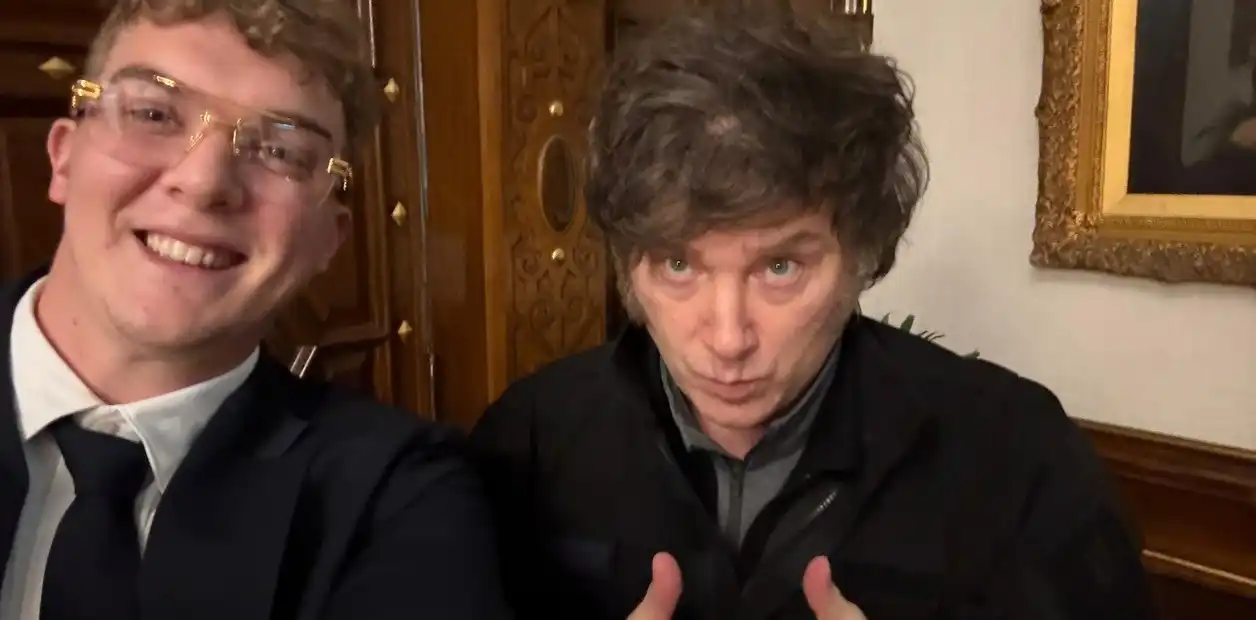
On January 31, Argentine President Milei posted a tweet on his X account stating, "He is providing me with advice on the impact and application of blockchain technology and artificial intelligence in the country," accompanied by a photo of himself with a young man in a suit wearing gold-rimmed glasses.
This person is Hayden Mark Davis, a key figure in the LIBRA token issuance controversy.
Who Is Hayden Mark Davis?
Hayden Mark Davis' LinkedIn profile indicates that since October 2020, he has been the CEO of Kelsier; since May of the same year, he has been the founder of Luxury Drip, a company of unknown industry (although there is an Italian brand of the same name in the urban fashion field); and according to Davis, he has been an entrepreneur since August 2017, running a company called Leaders Elevate. A Google search of this latter company leads to a result linking to a coaching-focused company founded by another individual named Tom Davis based in Barcelona.
Hayden Mark Davis' personal account still fails to reveal his story. The last photo was uploaded from the presidential palace by Javier Milei, while another one dates back to February 2022, showing the young man alongside several other individuals named Davis, with their names annotated. Thomas Davis and Gideon Davis appear as the CEO and co-founder of Kelsier, respectively. Currently, this account has been locked as a private account.
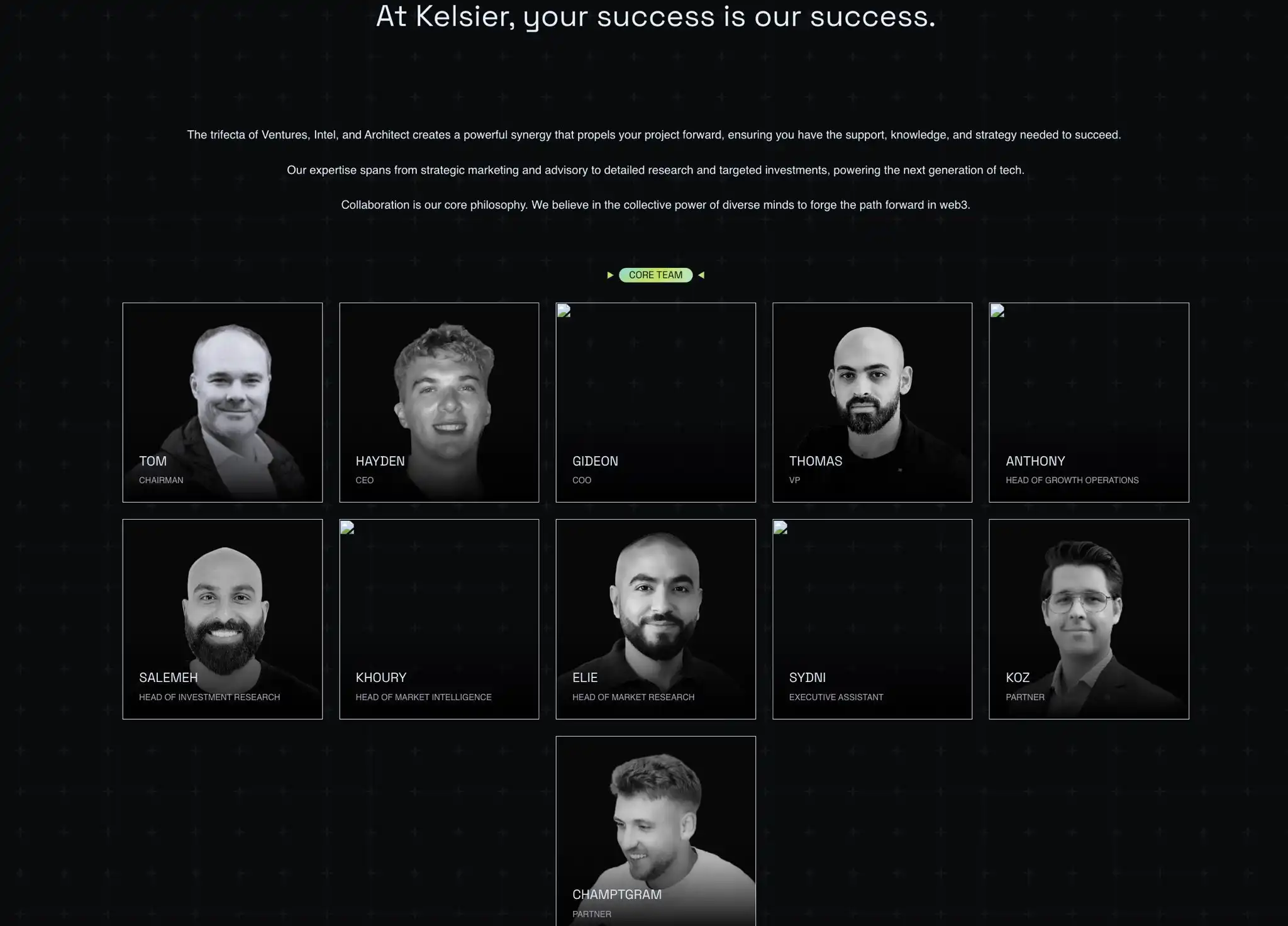
Former team members of Kelsier Ventures found through a web page snapshot
Unveiling Kelsier Ventures' Operations
The following content is from an investigative video by Nick O'Neil, CEO of BoDoggos Entertainment:
In this video, I want to delve deeper into Kelsier Ventures, who are still actively providing token issuance services to date, despite one of their founders, Hayden, currently facing risks and being embroiled in an international scandal. What I learned today is how Kelsier conducts the entire process of token issuance, including fees, the company's involvement in money laundering, token washing, and issues such as internal control for friends and family. Next, I will switch to the computer screen to showcase my understanding of Kelsier Ventures and their current modus operandi, dissecting the four key components of Kelsier Ventures step by step.
Shipping
I interacted with a team member to understand their actual fees and operational process. Firstly, Kelsier Ventures is still actively running, and Hayden is currently at an undisclosed location, although I roughly know where he is, I don't want to disclose that information.
Today I received a quote from the team, and their core business model still seems to be operating discreetly. You will soon see what I mean by the "launch and drain" process, designed to extract as much money as possible from their token. When you pay for their service, they will discuss how to deploy shuffling and target "sniping." Later on, I will delve into the fee structure, but essentially, they want this whole process to be untraceable and will engage in "money laundering" during the inflow and outflow.
Some may call it wire fraud; I don't know how they themselves would define it, leaving it to the judicial system to judge. But from my understanding, it's basically that.
They will also conduct market-making after token issuance and provide various options. These include short-term operations, the most famous being Melania, as well as long-term market-making, which requires them to use 20% of the token. The "shuffling" process I mentioned earlier is done in these operations, extracting funds from them.
Pricing
Next, let's look at pricing. In fact, the price is quite standard. If you have had contact with market makers in this field, you will know this is very straightforward. They will charge a 2% token share and plan to sell these tokens in the future.
I saw in a recently leaked internal video that this rate could be 1%. In fact, they may allocate this 2% share to different people, but in any case, they are charging this 2% token share and planning to settle a maximum of 1.1% daily. That is, if you provide a 2% token share and the service period is 20 days.
Calculating based on a daily service fee of $3000, or based on the amount you withdraw at 20%. If you ask them to sell $1 million today, then they will charge a 20% service fee, which is $200,000. So the fee structure is based on a higher amount.
However, there is also a part that is the cost of initiating these operations, which is a chart they use internally and provide to clients, this is today's latest pricing.
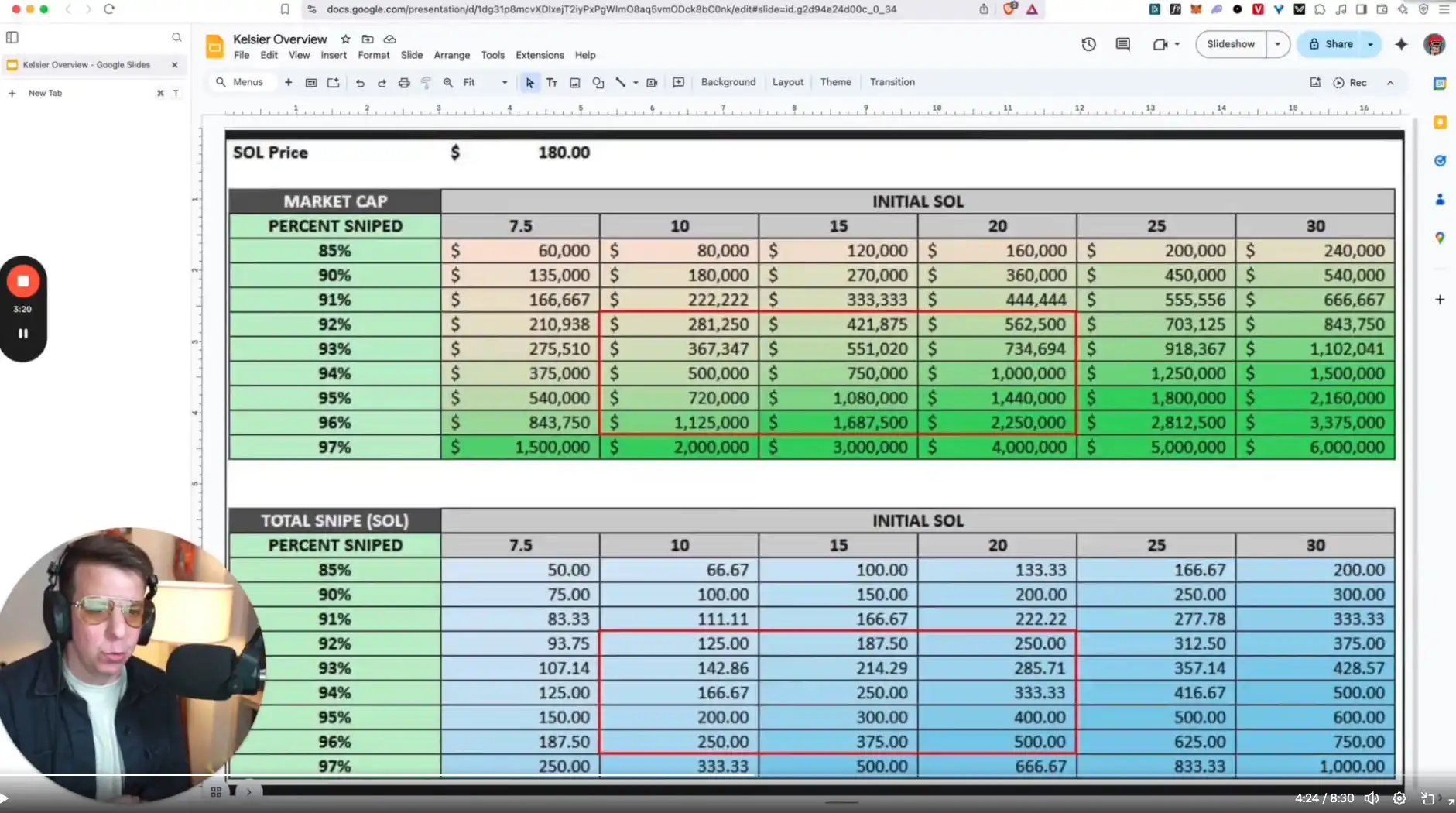
I'm not going to delve into it here as it's not important, but I'll give you an example. Let's say you want to set the token's market cap at $1 million and plan to conduct a 94% token "shuffle." They usually execute this "shuffle" operation at each issuance, with the ratio typically ranging from 85% to 97%. If you look at the issuance of the Melania token, you'll find that it falls within this range. In this way, they are actually getting in early before the market officially opens, essentially "front-running" all other buyers.
Using a $1 million market cap as an example, suppose you spend 333.33 Sol today to kick off this process. That's 333.33 multiplied by $180, totaling $60,000, plus 20 Sol as an initial cost, along with other expenses, resulting in a final cost of $63,500.
Why choose a higher market pricing? It may be because there is high demand, and they want to start at a high price. Of course, for some small projects, the market pricing is lower. However, for larger projects like Trump Token, Melania Coin, and others, the price will be higher, and their pre-shuffle ratio will be greater.
From my point of view, this practice is almost tantamount to illegal, but that's their structure. I suggest you take a deeper look at this chart to understand how they operate.
Finally, I want to mention a key point, and I'll further elaborate on it in the video. According to my sources, 90% of the "snipers" come from within Kelshear. They distribute tokens to friends or set up operations for their bots. Although I can't confirm this, it seems to be the way they operate, which is simply absurd.
As I said, they are still continuing these practices. The entire system operates on the basis of money laundering, presale sniping, market making, short-term typical "pump and dump" schemes (like the Melania token), followed by long-term market making. As mentioned in the conversation between Hayden and Dave Portnoy, they will eventually use the money they earn to buy back tokens and ultimately "dump" them on the market.
You may also like

Morning Report | OpenAI has submitted an S-1 registration statement draft to the U.S. SEC; Morpho completes $175 million financing

Galaxy Deep Research Report: How Hyperliquid's HIP-4 Upgrade Changes the Landscape of Prediction Markets?

Latest research from 13 top universities including Cornell University: The current state, challenges, and misconceptions of the fusion of Crypto and AI

Deconstructing Anthropic: The Best AI Company, Possibly Also a Type of Organizational Invention

Every exchange is a "Universal Exchange."

The counterattack of traditional finance: Alliance chains are quietly reviving
Pantera Capital Partner: How Tokenization is Restructuring the Private Equity and Early Investment Ecosystem?

Mastercard Launches Agent Pay for AI, Plans to Record AI Agent Payment Authorizations on Polygon
Mastercard launched Agent Pay for AI, a new payment protocol designed to help AI agents make small payments such as pay-per-use access to data and APIs. The system plans to record human-granted AI agent permissions on Polygon, focusing on verifiable authorization, identity, and payment controls.

Curve Deploys Llamalend v2 on Optimism With 250,000 OP Incentives
Curve launched Llamalend v2 on Optimism with 250,000 OP incentives from the Optimism Foundation. The upgrade expands Llamalend beyond its earlier crvUSD-focused model, adding broader collateral support, LlamaRisk market reviews, and the ability to use Curve LP tokens as collateral.

Raydium Old Liquidity Pool Reportedly Exploited, With $1.34 Million Moved to Ethereum and Tornado Cash
An old Raydium liquidity pool was reportedly exploited for around $1.34 million in USDC, RAY, and wSOL, with the stolen funds bridged to Ethereum and deposited into Tornado Cash. The incident highlights the tail risks of legacy DeFi pools, old contracts, and cross-chain fund laundering paths.
Kalshi Executive Challenges “SBF Backed AI Unicorns” Narrative, Says Leopold Aschenbrenner Was Key Figure
Kalshi executive John Wang questioned the “SBF backed AI unicorns” narrative, saying Leopold Aschenbrenner was the key figure behind major AI investment decisions.

New York Proposes Stricter Stablecoin Issuer Rules Aligned With Federal GENIUS Act
NYDFS proposed stricter stablecoin issuer rules aligned with the GENIUS Act, covering reserves, custody, redemption timelines, audits, and capital buffers.

CryptoQuant Says Bitcoin Profitable Supply Is Near 45% Pressure Zone as On-Chain Data Points to Market Repricing
CryptoQuant said Bitcoin’s profitable supply is nearing the 45% pressure zone, signaling rising market stress, unrealized losses, and a possible on-chain repricing phase.

Bitcoin Falls Below 200-Week Moving Average as On-Chain Data Shows Over Half of Supply in Loss
Bitcoin dropped below its 200-week moving average as on-chain data showed over 50% of circulating supply is now in loss, signaling rising market stress.

CFTC Reportedly Plans New Prediction Market Rules Focused on Manipulation Risk and Public Interest Review
The CFTC is reportedly preparing new prediction market rules focused on manipulation risk, public interest review, and retail trader protections.

Meet the new WEEX trial fund—your gateway to greater profits

WEEX Labs Lands at Dutch Blockchain Week: A Disruptive Crypto × AI Conversation Sets Sail in Amsterdam
SK Hynix Reportedly Plans U.S. ADR Listing as Early as August, With SEC Approval Possible in Late June
SK Hynix may pursue a U.S. ADR listing as early as August, with SEC approval reportedly possible in late June amid strong AI chip supply chain demand.
Morning Report | OpenAI has submitted an S-1 registration statement draft to the U.S. SEC; Morpho completes $175 million financing
Galaxy Deep Research Report: How Hyperliquid's HIP-4 Upgrade Changes the Landscape of Prediction Markets?
Latest research from 13 top universities including Cornell University: The current state, challenges, and misconceptions of the fusion of Crypto and AI
Deconstructing Anthropic: The Best AI Company, Possibly Also a Type of Organizational Invention
Every exchange is a "Universal Exchange."
The counterattack of traditional finance: Alliance chains are quietly reviving


