RWA and Memecoins in Web3: A Sustainable Revolution or Just a Crypto Market Frenzy?


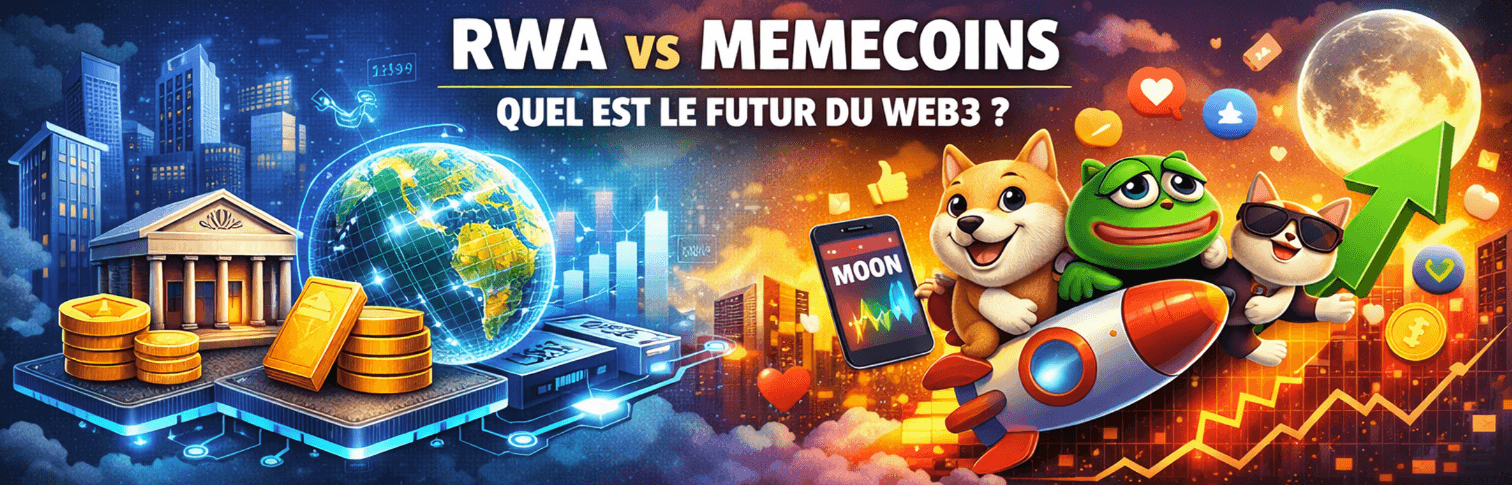
Web3 continues to transform the crypto ecosystem with the emergence of new trends capable of reshaping the digital economy. Among them, two narratives dominate discussions among investors and developers: RWA (Real World Assets) and memecoins.
While RWA promise to connect real-world assets to the blockchain, memecoins represent a completely different approach: a speculative internet culture fueled by communities.
But do these trends represent the future of Web3, or simply a new temporary crypto market frenzy?
In this article, we will analyze the real potential of RWA and memecoins, their advantages, their risks, and their possible role in the future of decentralized finance.
The Rise of RWA: Connecting Traditional Finance to the Blockchain
Real World Assets (RWA) represent one of the most promising sectors in Web3. The principle is simple: tokenize real assets on the blockchain to make them more accessible, liquid, and transparent.
These assets can include:
real estate
bonds
gold
commodities
commercial invoices
Thanks to tokenization, these assets can be fractionalized and traded on decentralized platforms.
For example, several projects listed on CoinGecko are already exploring this model.
These platforms allow users to track the performance of tokens linked to RWA and their market capitalization.
The main goal is to create a bridge between traditional finance (TradFi) and decentralized finance (DeFi).
According to several analysts, the potential market for RWA could reach several trillion dollars in the coming years.
Why RWA Could Transform Global Finance
Interest in tokenized assets continues to grow, particularly among financial institutions.
Key advantages include:
1. Increased Liquidity
Assets that are normally illiquid, such as real estate, can be fractionalized and traded as tokens.
2. Global Accessibility
Any investor with a crypto wallet can participate in the purchase of tokenized assets.
3. Transparency
All transactions are recorded on the blockchain.
4. Automation via Smart Contracts
Dividend or interest payments can be automated.
To track tokens associated with RWA, investors often use platforms such as:
Dexscreener is particularly useful for analyzing DeFi token volumes and liquidity in real time.
Memecoins: A Crypto Culture Fueled by Community
In contrast to RWA, memecoins rely primarily on virality and internet culture.
Projects like:
have proven that communities can create enormous market value.
Unlike traditional projects, memecoins often feature:
little real utility
high speculation
social media-based marketing
However, their popularity continues to grow.
Dexscreener also allows users to track new memecoins appearing on DEXs:
These tools have become essential for traders looking for the next viral trends.
Why Memecoins Continue to Attract Investors
Despite their speculative reputation, memecoins possess several attractive characteristics:
1. Viral Effect
Social networks like X, Reddit, and Telegram can propel a memecoin in just a few days.
2. Low Barrier to Entry
Investors can buy these tokens for just a few dollars.
3. Potentially High Returns
Some memecoins have generated gains of several thousand percent.
4. Web3 Culture
Memecoins also represent a form of community culture unique to the blockchain.
However, they remain extremely volatile.
Investors often use CoinMarketCap to verify data:
RWA vs Memecoins: Two Opposing Visions of Web3
RWA and memecoins represent two very different Web3 philosophies.
RWA | Memecoins |
| Based on real assets | Based on internet culture |
| Attract institutions | Attract communities |
| Long-term potential | High volatility |
| Financial infrastructure | Speculative narrative |
While RWA aim to revolutionize global finance, memecoins represent more of the social and viral aspect of Web3.
Both can nevertheless coexist in the crypto ecosystem.
Risks Associated with These Two Trends
Like any innovation, RWA and memecoins also carry risks.
RWA Risks
uncertain regulation
legal complexity
dependence on real-world assets
Memecoin Risks
market manipulation
rug pulls
extreme volatility
Analysis platforms such as:
allow investors to analyze projects before investing.
The Future of Web3: Convergence or Just a Temporary Fad?
The central question remains: are these trends sustainable?
For RWA, the answer seems quite positive. Many financial institutions are already experimenting with tokenization.
BlackRock, JPMorgan, and several banks are exploring blockchain solutions.
Memecoins, on the other hand, could remain a cyclical phenomenon of the crypto market, appearing with every new bull market.
However, some projects are beginning to add:
DeFi mechanisms
real-world utilities
community DAOs
Which could extend their lifespan.
Conclusion: Real Innovation or Just Frenzy?
RWA and memecoins illustrate two fundamental facets of Web3.
RWA represent the future of tokenized finance, capable of transforming traditional markets.
Memecoins, for their part, show the power of communities and internet culture in value creation.
Rather than opposing each other, these two trends could continue to coexist and shape the crypto ecosystem in the years to come.
For investors, the key remains the same: research, diversification, and risk management.