Stablecoins 2026: Is it worth investing in USDT and USDC? A beginner's guide

In 2026, stablecoins have become one of the key pillars of the cryptocurrency market. More and more investors are wondering what stablecoins are, whether they are safe, and how to buy them. This beginner's guide explains what a stablecoin is, how USDT and USDC work, their significance to the world of finance, and whether investing in stablecoins can truly reduce portfolio volatility. If you are wondering if it is worth investing in stablecoins, you will learn about their operating mechanisms, potential risks, and a practical guide to purchasing them here.
What is a stablecoin in practice?
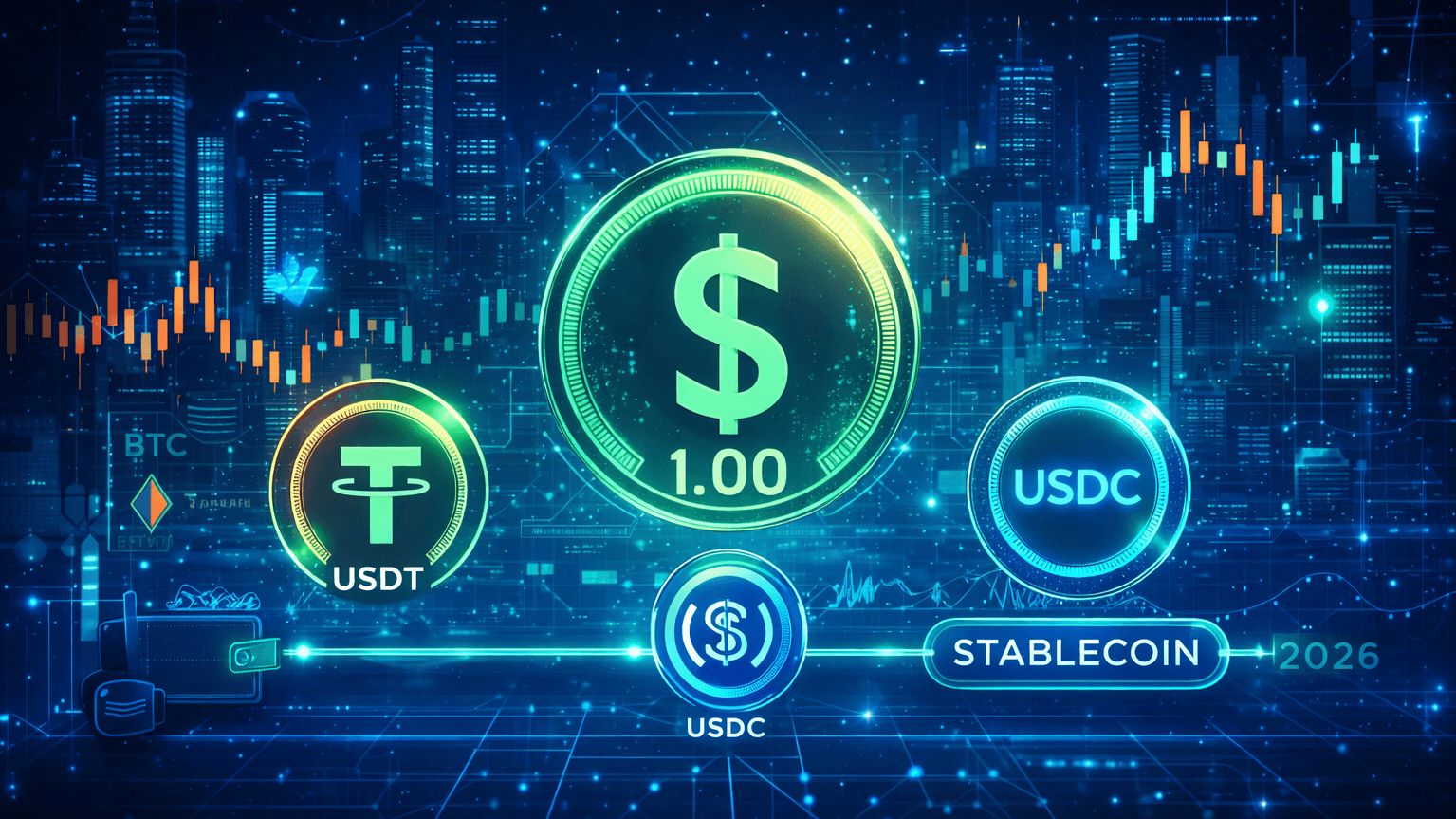
Let's start with the basics: what are stablecoins? Stablecoins are digital tokens designed to maintain a stable value—most commonly in a 1:1 ratio against a fiat currency, such as the US dollar. Unlike cryptocurrencies like Bitcoin, which can be highly volatile, stablecoins are intended to provide relative price stability.
A stablecoin is a type of cryptocurrency that uses a reserve mechanism or an algorithm to maintain a rate close to a specific underlying asset. Most often, stablecoins are pegged to the US dollar, making them a digital equivalent of traditional currencies in a blockchain environment.
In 2026, stablecoins serve as a bridge between the world of traditional finance and the cryptocurrency market. Users can store value in digital form, limiting the impact of the sharp price fluctuations typical of other cryptocurrency assets.
The most popular stablecoins – which ones should you choose?
The most popular stablecoins include USDT, USDC, and selected decentralized projects. The largest stablecoins dominate in terms of market capitalization and liquidity.
Is it worth investing in stablecoins? It all depends on your goal. If the goal is to protect capital from cryptocurrency market volatility, stablecoins offer a relatively stable value. However, it should be remembered that they do not generate profits from price increases, as their rate usually stays near 1 dollar.
The best stablecoins are projects that have a transparent reserve structure, regular audits, and high liquidity on exchanges.
How does the stablecoin market work in 2026 and what assets support their stability?
The stablecoin market in 2026 is primarily based on a model of securing value through reserves or algorithmic mechanisms. Stability is not accidental—it results from the project's economic design and the quality of the assets backing the token.
There are several basic categories of stablecoins on the market:
Fiat-backed stablecoins
This is currently the most popular stablecoin model.
Examples:
- USDT (Tether) – the largest stablecoin by market capitalization. Its reserves include cash, short-term US Treasury bills, and other money market instruments.
- USDC (USD Coin) – issued by Circle, known for more transparent reporting. Reserves are based primarily on cash and short-term US Treasury bills.
In this model, each token is intended to correspond to 1 dollar in reserve. Thanks to this, the rate remains close to 1:1 against the US dollar.
Crypto-backed stablecoins
In this model, the collateral consists of other cryptocurrencies, most often Ethereum.
Example:
- DAI – a decentralized stablecoin issued by the MakerDAO protocol. The collateral consists of cryptocurrencies deposited in smart contracts. The system uses over-collateralization (e.g., 150% of the value) to reduce the risk of price drops.
This model is more decentralized but requires complex risk management mechanisms.
Commodity-backed stablecoins
Here, the token represents a physical asset.
Example:
- PAXG (PAX Gold) – a stablecoin pegged to physical gold. Each token corresponds to a specific amount of gold stored in vaults.
This solution combines blockchain technology with traditional real-world assets.
Read also: Pax Gold (PAXG) – gold as a token on the blockchain. Trading, security, and investing.
Algorithmic stablecoins
They do not have a traditional reserve. Stability is maintained through an algorithm that regulates supply.
Historical example:
- UST (TerraUSD) – a project that attempted to maintain stability through a burn-and-mint mechanism for tokens. Its collapse showed that algorithmic stablecoins carry increased risk.
In 2026, investors are approaching this model much more cautiously.
What are stablecoins used for and how do they affect the cryptocurrency market?
Stablecoins serve as a tool for fast payments and value transfer. They enable transactions 24/7, without the limitations of traditional banking systems.
They play a key role in the DeFi ecosystem, where they can be used as collateral for contracts or loans. On cryptocurrency exchanges, they constitute the primary trading pair.
Although stablecoins aim to maintain a stable value, they are still cryptocurrencies operating based on blockchain technology.
Stablecoins as an alternative to traditional currencies and other assets
Stablecoins are increasingly seen as a digital alternative for storing funds. In countries with high inflation, stablecoins pegged to the US dollar can help protect the value of capital against the decline in the purchasing power of the local currency. They offer instant liquidity and access to funds 24/7, without the limitations of traditional banking systems.
Stablecoins vs. cryptocurrencies (Bitcoin, Ethereum)
The biggest difference concerns volatility. Bitcoin and Ethereum can grow dynamically, but also fall sharply. Stablecoins maintain a relatively constant value (usually 1:1 against the dollar), which is why they are used more for storing capital than for speculative gains. During times of high market volatility, investors often use them as a "safe haven."
Stablecoins vs. traditional assets (stocks, bonds, gold)
Stocks and cryptocurrencies offer growth potential, bonds provide income, and gold protects against inflation. Stablecoins, on the other hand, are distinguished by high liquidity, fast fund transfers, and easy accessibility. They do not generate interest on their own, but they can be used in DeFi strategies.
When is it worth using stablecoins?
- during cryptocurrency market downturns,
- for managing portfolio liquidity,
- for international fund transfers,
- as an element of asset diversification.
Conclusion: Stablecoins do not replace other investments, but they act as a stabilizing element of a portfolio—especially during periods of market uncertainty.
Risk and regulations – are stablecoins completely safe?
Even if the main risk of cryptocurrencies is volatility, in the case of stablecoins, the key threats concern the quality of reserves and legal regulations. Legal issues of the issuer can affect the stability of the project.
In 2026, regulations in the European Union require greater transparency from issuers. Stablecoins are backed by assets, but a lack of full transparency can weaken market confidence.
Therefore, an investor should analyze not only the rate but also the security structure and connections to traditional finance.
USDT – is the largest stablecoin on the market safe?
USDT is the most frequently used and largest stablecoin on the market. The issuer is Tether, which declares that it maintains reserves corresponding to the number of issued tokens. This means that a specific pool of assets should stand behind every USDT.
In the past, questions were raised regarding the transparency of USDT reserves, which is why stablecoin issuers now publish reports on the structure of their backing assets. The largest stablecoins operate under increasing pressure from regulators and financial markets.
For an investor, this means that even if a stablecoin is pegged to the US dollar, one must analyze the credibility of the issuer and the quality of the collateral.
Is USDC fully backed?
USDC, known as USD Coin, is the second-largest stablecoin in the world. It is often emphasized that USDC is fully backed by cash and short-term Treasury bills.
Compared to USDT, USDC is perceived as more transparent in terms of reserve reporting. The issuer of this stablecoin declares full backing and regular audits.
For the user, this means a higher level of trust, although even in this case, regulatory and market risks should be taken into account.
How to buy stablecoins? A practical step-by-step guide and key tips
Buying stablecoins, such as USDT or USDC, is a relatively simple process. However, it is worth approaching it consciously—paying attention not only to the transaction itself but also to costs, market liquidity, and the issuer's credibility.
If you are just starting your adventure with the cryptocurrency market and do not yet have experience with exchanges, it is worth first reading the guide How to start investing in cryptocurrencies in 2026, which explains the basics step-by-step.
Below you will find a practical guide showing how to buy stablecoins and what to pay attention to during your first transaction.
Step 1: Choose an exchange
The first step is to choose a trusted platform. You can use an exchange such as WEEX, which offers access to the most popular stablecoins and an intuitive interface.
What to pay attention to at this stage?
- availability of the selected stablecoin (e.g., USDT, USDC),
- market liquidity — the higher it is, the smaller the spread and the easier the execution of orders,
- transparency of the fee table.
High liquidity means that you will be able to quickly buy or sell stablecoins without a significant impact on the price.
Step 2: Create and verify an account
After choosing a platform, you must register as a user and go through the identity verification (KYC) process. This is a standard procedure that increases the security of funds.
It is worth choosing exchanges that operate in accordance with regulations and cooperate with reliable stablecoin issuers.
Step 3: Deposit funds
You can deposit the following into your account:
- fiat currency (e.g., bank transfer, card),
- cryptocurrencies from another wallet.
Before making a deposit, check:
- transaction fees,
- any currency conversion fees,
- the cost of future withdrawal of stablecoins to an external wallet.
Sometimes a low purchase commission can mean a higher withdrawal fee — therefore, always analyze the total cost of the operation.
Step 4: Buy stablecoins
Select the stablecoin you are interested in, e.g., USDT or USDC, and execute the purchase transaction.
Before finalizing the order, it is worth checking:
- current rate and spread,
- trading volume,
- availability of trading pairs.
The most popular stablecoins usually have high liquidity, which makes it easier to execute larger orders without sudden price changes.
Step 5: Secure your funds
If you plan to store stablecoins long-term, consider moving them to a secure private wallet (e.g., a hardware wallet).
Also, remember to choose the appropriate blockchain network when withdrawing — fees may vary depending on the chain (e.g., Ethereum, Solana, TRON).
Additional tips for buying stablecoins
To increase security and reduce risk, remember three key rules:
- Pay attention to transaction fees and withdrawal fees
Check commissions both when buying and withdrawing stablecoins. Costs may vary depending on the platform and network. - Analyze liquidity and availability
Choose stablecoins listed on many markets with high volume. This will ensure easier trading and a smaller spread. - Choose reliable issuers with transparent reserves
The safest stablecoins are those whose issuers regularly publish reports on the structure of reserves and are subject to audits. Transparency is the foundation of stability.
Buying stablecoins is not just about clicking the "Buy" button. It is a process that requires:
- choosing the right exchange,
- analyzing costs,
- checking market liquidity,
- assessing the issuer's credibility,
- properly securing funds.
A conscious approach allows you not only to buy stablecoins safely but also to manage them effectively in the long term.
Frequently asked questions about stablecoins
Are stablecoins safe?
They are backed by assets, but there is always risk associated with the issuer and regulations.
It depends on your preferences – USDT offers the highest liquidity, and USDC offers greater transparency.
Can you earn money on stablecoins?
Yes, through DeFi strategies or savings programs.
What fees apply?
Fees depend on the exchange and the blockchain network.
Summary – is it worth investing in stablecoins in 2026?
- Stablecoins offer a stable value.
- The largest stablecoin on the market is USDT, and USDC stands out for its transparency.
- Fiat-backed stablecoins have a reserve of assets.
- The stablecoin market is growing along with the adoption of cryptocurrencies.
- When investing in stablecoins, you should analyze regulatory risk and the quality of the collateral.
- They are an effective tool for portfolio diversification.
In 2026, stablecoins remain a key element of the cryptocurrency market and digital finance, offering stability in a dynamic blockchain environment.
Do you want to buy USDC? Register on WEEX and start trading today – gain access to a secure platform, low commissions, and advanced tools that support your success in the cryptocurrency market.
Disclaimer
WEEX and its affiliates provide services related to the exchange of digital assets, including trading derivatives and leveraged products, only where legal and to eligible users. All content is for general information purposes and does not constitute financial advice — it is recommended to seek independent advice before starting to trade. Cryptocurrency trading involves high risk and may result in the total loss of funds. By using WEEX services, you accept the associated risks and terms. Never invest more than you can afford to lose. Details can be found in the Terms of Service and Risk Disclosure.